
C2PA in photography

A photograph has long enjoyed a special status. It seemed to provide visual proof of reality. However, this trust has been greatly weakened. An image can now be generated by artificial intelligence, deeply retouched, cropped or simply published outside its original context. The problem is therefore no longer just about fake images. It also concerns our ability to know the origin of a photograph, its author, the modifications it has undergone and the conditions of its publication.
It is in this context that the C2PA standard offers a new approach. Its objective is not to declare that a photograph is “real”. Rather, it seeks to make its provenance verifiable.
Can a photograph still constitute evidence?
A digital photograph no longer naturally carries all the information that would make it possible to establish its history. EXIF metadata can indicate the model of a camera, the focal length used, the speed or the date of shooting. IPTC metadata can provide information on the author, the copyright or the caption. This information remains valuable for professional photographers and agencies. However, it is not enough to establish a chain of trust. An image can be exported, copied or modified. Its metadata can also disappear during processing or distribution.
C2PA therefore approaches the problem differently. It associates content with provenance information accompanied by a cryptographic signature. This signature then makes it possible to verify that the protected information has not been altered. We no longer just want to know what an image contains. We try to find out where it comes from and what happened to it.
C2PA does not certify the truth
This distinction deserves to be made from the outset. C2PA cannot determine whether a photograph accurately represents reality. It cannot know whether a photographer lied about the location or context of a photograph. It does not turn a photograph into absolute proof.
On the other hand, it can be used to verify certain claims about one’s background. For example, a provenance may indicate that an image was captured with a compatible device, then developed in software, cropped and exported. Another step can then be added by a news agency or a publisher. The difference is fundamental: C2PA documents the provenance, it does not certify the reality represented.
Why is traditional metadata no longer enough?
Photographers have long used metadata to document their images. In particular, it makes it possible to identify the author and to store technical or editorial information. But metadata alone does not necessarily constitute proof of origin.
It is therefore necessary to distinguish between information that is simply recorded in a file and information whose integrity can be verified. This is one of the essential contributions of C2PA. A declaration of provenance can be digitally signed. If someone then modifies the protected data, the verification can reveal this break. The system can thus accompany an image throughout its journey, provided that the various software and services retain this provenance.
A chain of trust rather than just a certificate
C2PA makes sense when it is not limited to the shooting. Let’s imagine a press photograph. The photographer takes the shot with a compatible camera. The file then enters his development software. It can be cropped or corrected. Finally, the editorial team can add editorial information before it is published on a website.
Each step can contribute to where the content comes from. Camera → development → retouching → editorial validation → publication. The interest then becomes clear. The photograph does not need to remain static to maintain a verifiable story. A change can be documented instead of simply invisible.
Why does this question become particularly important with AI?
Artificial intelligence has changed the nature of the problem. It is now possible to create a photorealistic image without a camera. It is also possible to profoundly modify an existing photograph while maintaining a perfectly believable appearance.
However, simply opposing “real photography” and “AI-generated image” would be too simplistic. A professional photograph also undergoes transformations. A RAW development modifies the image. A crop transforms it. A color correction intervenes on its rendering. A retouching can remove certain elements. A background generation can go much further.
The question therefore becomes less: “Has this image been modified?” Rather, it becomes: “What modifications have been made, by whom and in what context?” This approach corresponds more to the reality of contemporary photographic work.
The real challenge: becoming a universal standard
However, C2PA will only be able to play this role if it goes beyond the borders of the manufacturers and publishers who implement it. A provenance system would be of little use if it only worked with a few cameras, software or a particular platform.
To become a truly trusted infrastructure, it must be reliable, widely distributed, accessible and readable by all. This universality also requires true interoperability. A photographer should not have to use a particular proprietary software to consult or verify the provenance of an image.
The same principle must be able to work in a professional environment as in free software. It must be able to be exploited by different manufacturers, publishers, developers and platforms. This is precisely the point of an open standard: trust should not belong to a single company.
From the photographic file to the Web
This question becomes even more important when the image leaves the photographer’s computer. A photograph may have a perfectly documented provenance at the time of export. However, this information loses much of its value if it becomes invisible when it is published on the Internet.
In the long term, the provenance must therefore be able to be understood on several levels: by the file, by the software that processes it, by the site that publishes it, by the browser and, potentially, by search engines. The objective would then be to make verification as simple as possible for the public. It should not be necessary to be a photographer, computer scientist or cryptography specialist to know that an image has a verifiable provenance.
Towards a new reading of images on the Internet
This evolution could gradually change our relationship with photographs published online. An image could be accompanied by information indicating its origin, its author, its transformations and its publisher. A search engine could also use this information to better understand the nature of visual content. We could then distinguish a photograph whose provenance is verifiable from an image whose origin remains unknown.
However, this distinction should never lead to an image without C2PA being automatically considered fake. An old photograph, a scan, an image from an incompatible device or a file whose provenance has been lost can perfectly well be authentic. The absence of a verifiable provenance does not prove a forgery.
The real challenge of C2PA
The challenge is therefore not only technical. For C2PA to become a success, a whole chain must work together: device manufacturers, processing software, publishers, news agencies, hosting providers, websites, browsers and search engines.
The system will also have to remain open enough to allow new players to join this chain, including those of free software. Finally, verification must remain simple and accessible. A trusted technology can only become universal if everyone can understand the result of this verification.
A verifiable story rather than an automatic truth
C2PA will therefore not solve the problem of false images on its own. Nor will it automatically determine what is true or false. Its ambition is different and perhaps more realistic: to give images a verifiable story. For photography, this evolution could be considerable. An image could keep track of its origin while taking on the normal stages of its processing.
And if this technology truly becomes universal, provenance could gradually become as natural a property of a digital image as its dimensions or format. C2PA does not seek to make photographs real. It seeks to make their history verifiable.
In the next article, we will follow this story concretely: From the camera to the raw file, then from development to retouching. Above all, we will see what a provenance system can really guarantee at the time the photograph is created.

Stéphan, photographer and director, began his career behind the lens before moving into documentary and advertising film production. In 2016, he founded his own studio and gallery, where striking visuals and digital marketing innovations come together. His avant-garde approach explores the boundaries of art and digital communication, brilliantly and accurately capturing the essence of the contemporary world.

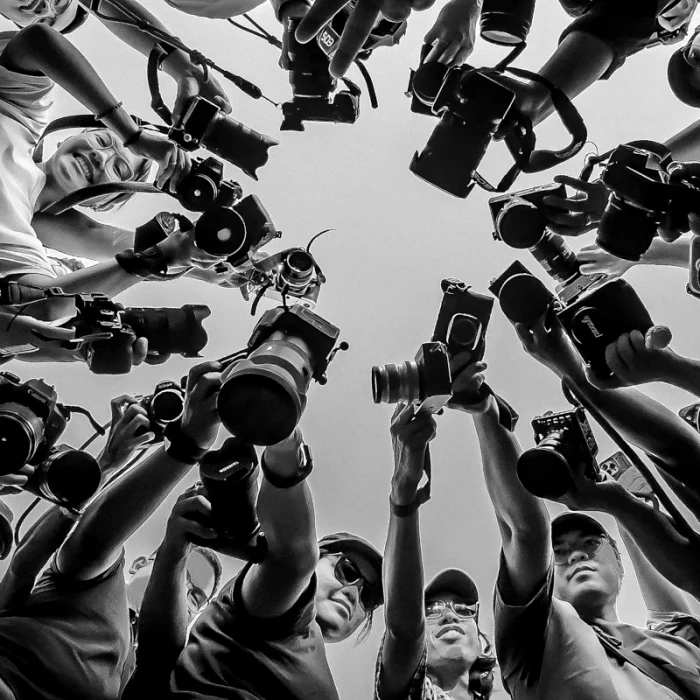
Traceability from the camera to the file broadcast.

Bearing witness to a world that no longer looks at itself