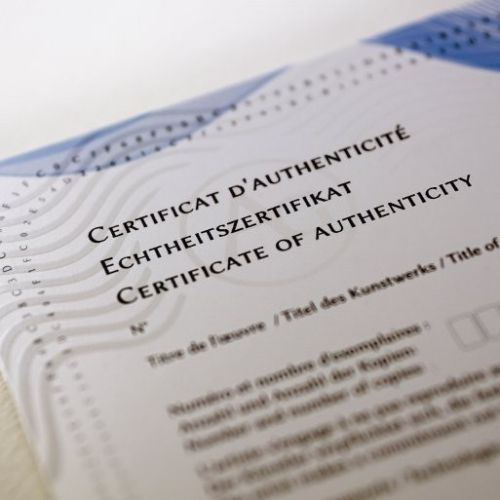

C2PA: Producing reliable photographic traceability

If C2PA is to verify the origin of a photograph, it all starts at the moment of shooting. But what can a camera really certify? And what happens to this information when the photographer transfers his file, develops it, crops it or retouches it? To understand the origin of an image, you have to follow its journey from its creation. Trust is not based on a single piece of information. It depends on the continuity of the entire chain.
The first step: capturing the image
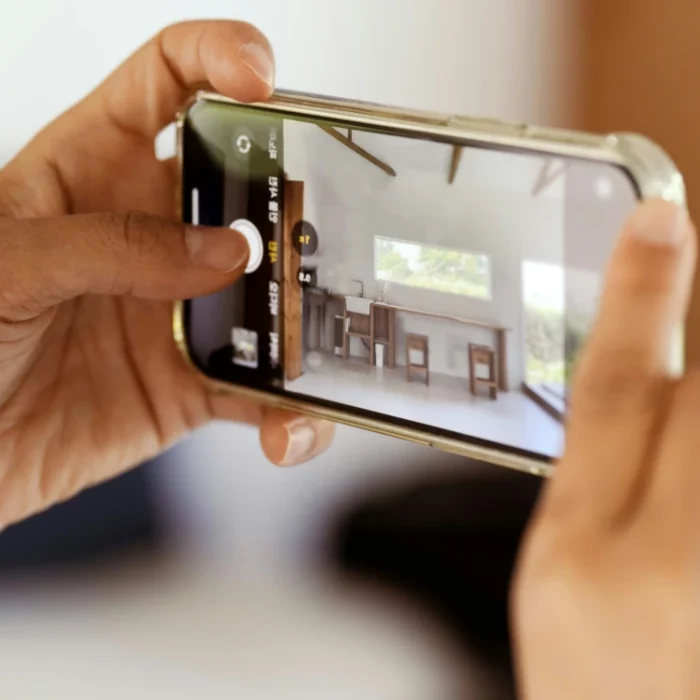
A digital photograph begins with a capture taken by a camera. Traditionally, the RAW file retains a lot of technical information: camera model, lens, focal length, shutter speed, aperture, sensitivity or date of shooting. This data is valuable. However, it is not enough to demonstrate that the file really comes from the indicated camera.
This is where the logic of C2PA comes in. A compatible device can produce a provenance statement associated with the capture. This statement can then be verified using a cryptographic signature. The principle therefore changes in nature: the device no longer simply writes information to the file. It can help establish verifiable proof of the digital origin of the content.
A camera does not certify what it photographs
However, there is a need to avoid significant confusion. A camera can help to certify that a file has been produced by this camera. It cannot certify that the scene photographed corresponds to the reality described by its author. A camera can record a photograph of a building, a demonstration or an event. It does not know if the caption associated with this photograph is accurate. It also does not know if the photographer is actually in the indicated location or if the scene was staged.
The origin of a file and the truth of its contents are therefore two different questions. This limit is not a flaw in the system. On the contrary, it makes it possible to define precisely what technology can guarantee. C2PA can provide verifiable elements on the origin and digital path of an image, without claiming to become an arbiter of reality.
RAW remains at the center of photographic work
For a professional photographer, of course, photography does not end with the shutter release. The RAW file usually enters a development software. The photographer then adjusts the exposure, white balance, colors, contrasts or sharpness. These operations are part of normal photographic work and do not necessarily mean that the image loses its documentary character.
The problem arises when these transformations become indistinguishable from deeper manipulations. Exposure correction and the removal of a person from a scene do not have the same editorial significance. However, without history, the final file does not always allow us to know the difference. The provenance can provide this additional information.
Document transformations rather than prohibit them
This is one of the most interesting ideas of digital provenance. A system like C2PA does not need to prohibit retouching. On the contrary, it can document the individual steps of the work. An image can thus start its journey with a capture declaration. The processing software can then add a new step. A crop can be saved and a larger change can also be declared.
Photography then remains an evolving object, but its evolution becomes potentially verifiable. This approach corresponds better to professional practice than the idea of a photograph that should remain strictly identical between the shutter and the publication. The objective is not to prevent the photographer from working on his image, but to be able to keep an intelligible trace of important transformations.
Reframing: technical modification or editorial modification?
Cropping is a great example. Cropping a photograph doesn’t necessarily change what it represents. Still, it can alter how the scene reads. In press photography, this distinction can become important. Removing an insignificant part of the edge of an image doesn’t have the same effect as purposely removing an essential element from the scene.
A detailed provenance could make it possible to know that a reframing has taken place, without deciding for the reader whether it is acceptable. Technology can document an intervention without deciding its editorial legitimacy. This responsibility remains with the photographer, editor or publisher who publishes the image.
Photo retouching is not necessarily a falsification
The same reasoning applies to retouching. A photographer can correct a color cast, recover highlights or clean up dust from the sensor. These interventions are part of the common processing of a photograph. Conversely, some modifications can profoundly transform the content of the scene.
The C2PA should therefore not be considered as an arbiter responsible for classifying each intervention between “good” and “bad”. Rather, its role is to keep information about what has happened. For the public as well as for a newsroom, this transparency can be more useful than a general ban on retouching.
And when artificial intelligence comes in?
The issue becomes even more sensitive with generative tools. Software can now edit a photograph in a matter of seconds. It can extend an image, replace an element, reconstruct a background, or generate an entire part of the scene. These operations don’t have to be treated in the same way as brightness correction.
The advantage of a detailed provenance is precisely to be able to distinguish the different stages of processing, rather than reducing all interventions to a simple “retouched” mention. For a press photograph, this information could become particularly important: the reader could know whether an image has simply been developed, strongly retouched or whether part of its content has been generated.
Reliability depends on the complete chain
However, there is a difficulty: the provenance can only work properly if the different links in the chain preserve it. Let’s imagine a classic workflow: camera → RAW file → development software → JPEG → export editing software → server → web page. If each step preserves and enriches the provenance, the story of the image can remain coherent.
On the other hand, if software deletes this information or a platform destroys the provenance during export, part of the story can disappear. That’s why the future of C2PA doesn’t just depend on camera manufacturers. It depends on the interoperability of the entire photographic chain.
Why interoperability is essential
A photographer should not have to manually reconstruct the provenance of each image. The system should be able to work between different cameras, different software and different platforms. For example, a photographer could shoot with a Nikon or Leica camera, develop their RAW in a compatible environment, perform certain operations in another software, and then publish their image from a server using a different technology.
Provenance must be able to accompany this process. This requirement also makes compatibility with free software essential. A standard that is destined to become universal cannot depend exclusively on a few commercial applications. Free tools must be able to read, verify and, where possible, contribute to the chain of origin.
A reliable photograph must remain verifiable
The notion of reliability therefore also deserves to be clarified. A reliable photograph is not necessarily a photograph without retouching. Rather, it is a photograph whose important information can be verified and whose significant transformations can be documented.
This difference could become decisive for professional photography. A commercial portrait, an art photograph and a press image do not have the same requirements. Yet, all three can benefit from a verifiable provenance. Technology then provides a common framework, while each field can define its own editorial rules.
From photographer to reader
The real objective finally appears when the image leaves the photographer’s software. The provenance must be able to follow the image until it is published. It must then remain understandable to the viewer. The photographer therefore does not only need a camera that can sign an image. He needs a complete chain that keeps this information all the way to the public.
Eventually, a reader could consult the history of a photograph without knowing the software used or understanding the cryptography that protects the information. He could simply see that the photograph has a verifiable provenance, know its author and understand the main steps of its processing.
The next step: trust without having to believe
The C2PA thus proposes an important evolution of digital photography. Instead of asking the public to simply believe what a caption, a photographer or a media outlet says, it becomes possible to provide elements that make it possible to verify the origin and path of the content.
This verification will never replace journalistic work, critical eye, or editorial responsibility. It can, however, bring them a new layer of trust. The challenge is therefore not to create photographs that are impossible to modify. The challenge is to be able to know what has been done to an image and by what stage of the chain.
In the next article, we will go further in this chain. We will see how retouching software, cropping and free software can participate in a continuous provenance, especially with the question of GIMP and interoperability.

Stéphan, photographer and director, began his career behind the lens before moving into documentary and advertising film production. In 2016, he founded his own studio and gallery, where striking visuals and digital marketing innovations come together. His avant-garde approach explores the boundaries of art and digital communication, brilliantly and accurately capturing the essence of the contemporary world.
Why make the origin of an image verifiable?


Bearing witness to a world that no longer looks at itself