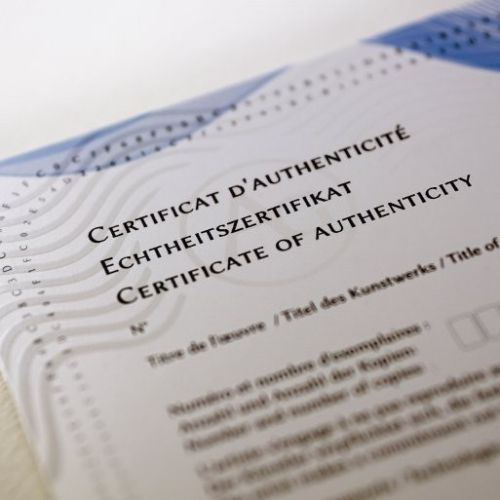

Photo, video and AI: when human control exceeds generative chaos.

Photography and AI: artistic mastery versus algorithmic chance
Visual creation today opposes tailor-made photography and professional digital video to the rise of images generated by artificial intelligence. Photography remains an art where the gaze, intuition and choice of moment are unique. Each framing, each light, each emotion captured tells a story. The photographer and videographer’s know-how transforms reality into an image, drawing inspiration from the codes of cinema to compose precise, elegant and inhabited visuals.
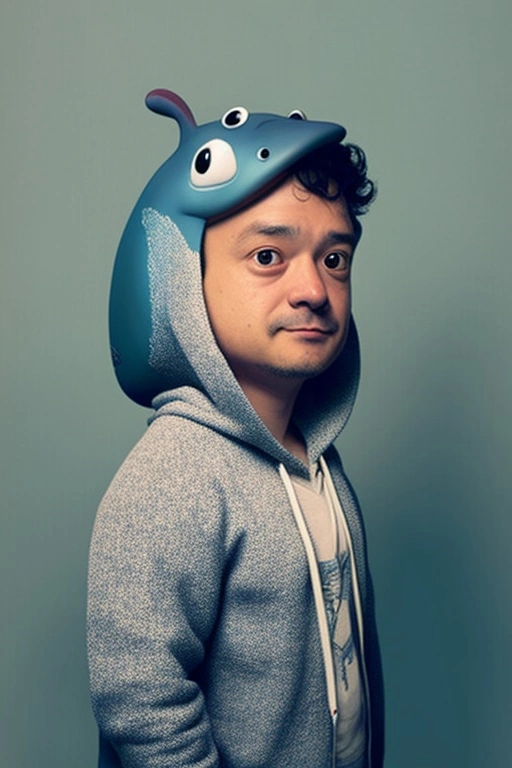
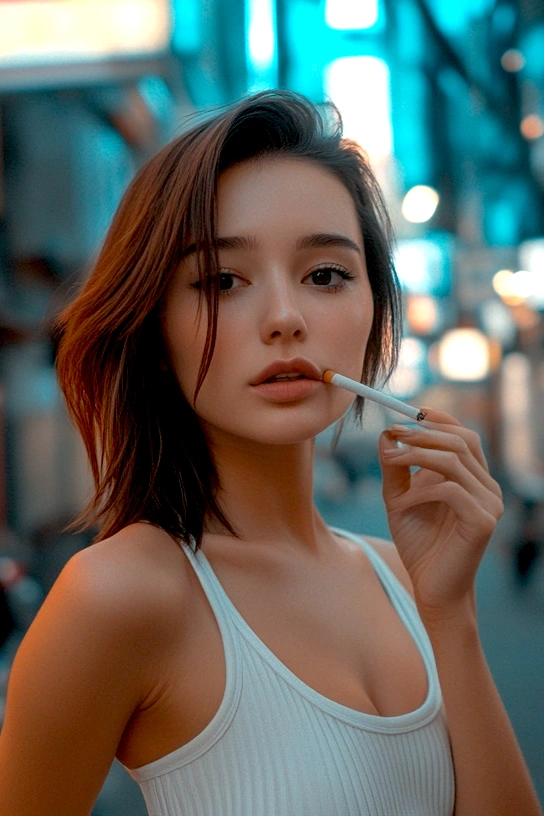
AIs, on the other hand, rely on existing data and randomly interpret anything that is not explicitly formulated in the prompt. Without an extremely rigorous promptness, chance dominates. AI often produces images that are attractive, but often inconsistent or far from the original intent. In addition, originality remains limited, since AI does not really create: it recombines and copies the existing, without carrying its own artistic vision or an authentic signature.
THE LIMITS OF ARTIFICIAL INTELLIGENCE IN VIDEO
When you build a film scene by scene from prompts, the narrative quickly becomes unstable.
The character loses his visual bearings: his face evolves, his morphology changes, and his appearance varies from one sequence to the next in an incoherent way. This is the most important problem at this time. Thus, visual and narrative continuity is weakened, even when real photos of the actor are injected to guide the generation.
Connection errors frequently occur and affect manholes, camera axes, lights and positions. With a strong rigor of the prompts, the errors are reduced, but remain perceptible. In a professional context, such a discontinuity could not be accepted, as ruptures can disconcert the viewer’s perception. In addition, color grading is often poorly mastered, without finesse of adjustment, which further weakens the overall visual identity.
In addition, an AI actor’s expression constantly varies depending on the text, pace, or action, with no stable embodied intent. The voices generated remain approximate and frequently give the impression of artificial dubbing. Creating a physical and verbal altercation is a very high level of promptness. 🙂
Conversely, real actors can whisper, scream, cough or express a complex emotion in an organic continuity, creating a break in the game…
However, there is some progress. By refining and lengthening the prompts, it becomes possible to obtain more coherent and better structured images. However, this improvement implies a strong constraint: very long, complex instructions that are not well suited to smooth production.
In addition, the overall control remains insufficient to guarantee true narrative and visual coherence over time. Very quickly, these limits become perceptible to the viewer. Attention decreases, emotion weakens, and then interest erodes. Without solid continuity or overall control, the image loses its ability to captivate in the long term. In the majority of cases, the AI must therefore limit itself to modifying secondary elements in order to preserve the balance of the film.
Artificial intelligence brings real value in productions with a high visual ambition
Recent advances in generative artificial intelligence are undeniable. The most advanced models now make it possible to produce coherent video sequences, generate complex environments or extend sets with a level of realism that would have been difficult to achieve just a few years ago. These advances open up new opportunities for film, high-end advertising and productions requiring sophisticated visual effects.
The most relevant applications concern scenes that would be technically impossible, excessively expensive or risky to produce: science fiction universes, natural disasters, imaginary creatures, set extensions, complex physics simulations or even certain dangerous stunts. In these situations, artificial intelligence effectively complements traditional VFX techniques and helps reduce some human risks while expanding creative possibilities.
Technical limitations persist despite recent progress
The most successful video models are progressing rapidly, but they still have several objective limitations. The consistency of movements over long sequences, the management of complex physical interactions, the continuity of the characters or the precise control of expressions remain major challenges. These constraints often require a lot of correction work in post-production.
Also, not all platforms offer native 4K production. Many models still generate their videos in lower resolutions, requiring upscaling processing to reach professional broadcast standards. Even if these enhancement techniques are increasingly effective, they do not always replace native capture or rendering in very high definition.
AI does not eliminate production costs
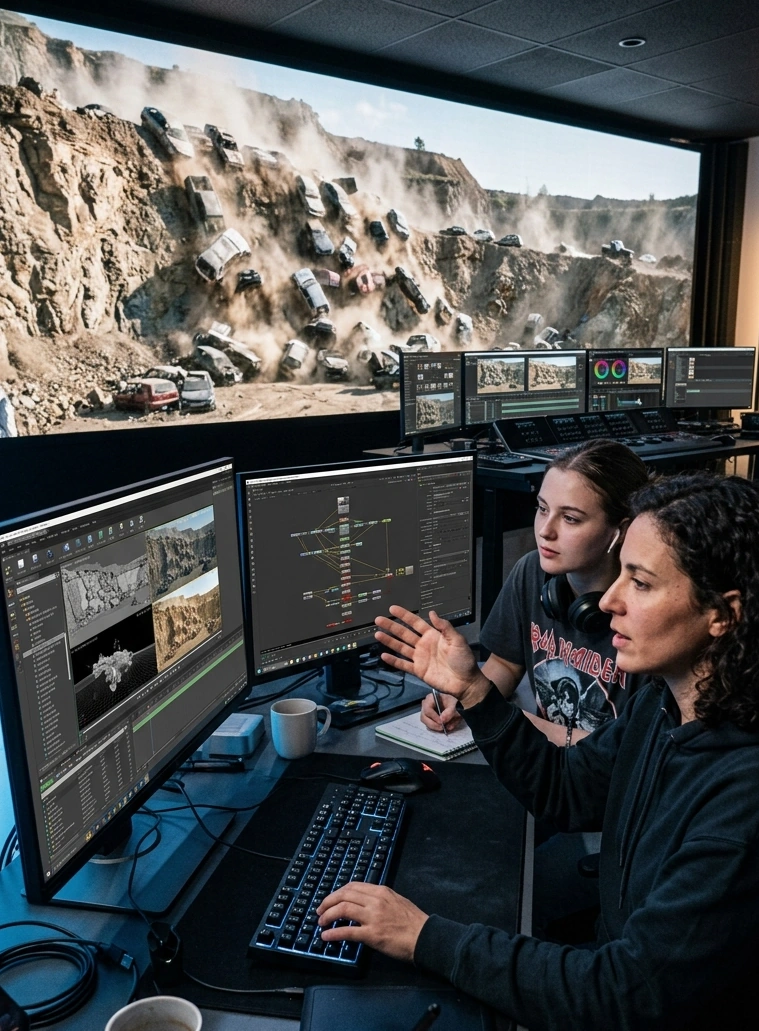
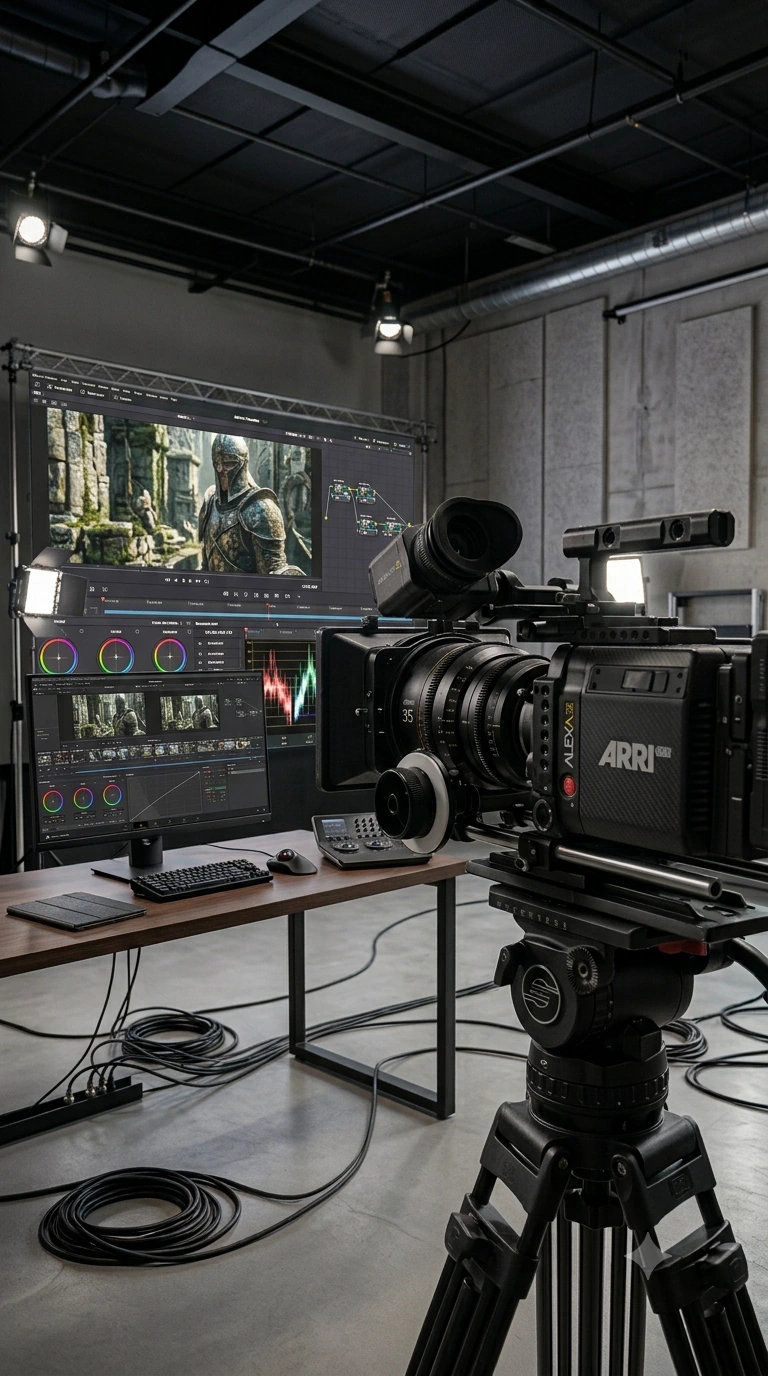
Contrary to popular belief, artificial intelligence does not transform an ambitious production into a low-cost project. The best results usually require many iterations, precise art direction, advanced prompting skills, frame-by-frame corrections, compositing interventions, color grading, as well as retouching by visual effects specialists.
Professional productions today combine several technologies: generative models, compositing software, 3D animation, camera tracking, physical simulation and human interventions at every step of the process. Artificial intelligence thus becomes an additional tool within an already complex production chain, rather than a replacement for all image professions.
Technology to be used according to the needs of the project
Artificial intelligence now finds its full legitimacy when it responds to a real production constraint: creating a set that is impossible to build, representing an unachievable event, securing a stunt or producing an entirely fictional environment. In these contexts, it is a particularly relevant technological lever.
On the other hand, his interest becomes more limited for simple achievements such as a company portrait, an interview, a report, an institutional presentation or a photographic session. In these situations, a traditional shoot offers even better control over lighting, acting, art direction and final quality, often at a comparable cost, or even lower when you take into account the time it takes to generate, select and correct the content produced by AI.
Full control of the image
High-end video production offers absolute control over every parameter. Exposure, light, composition, depth of field and colorimetry are precisely controlled. Nothing is left to chance.
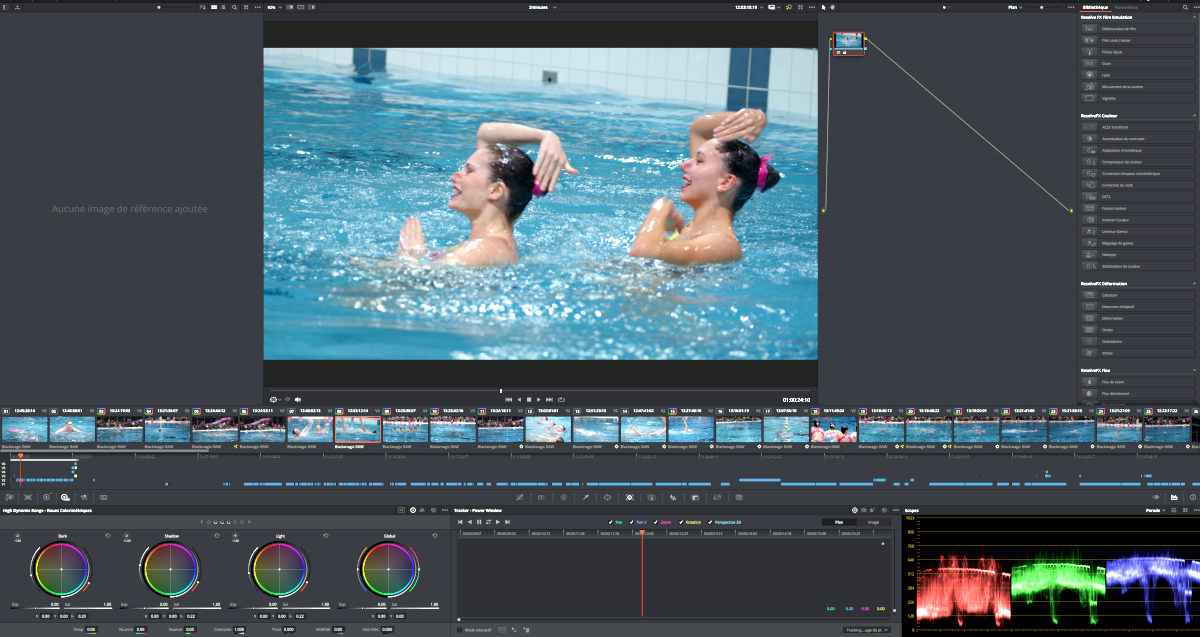
Then there are video editing, color grading and, if necessary, special effects software. The experience of the professional then becomes decisive. It makes it possible to harmonize the shots, to structure the narrative and to sublimate each image. The film gains in coherence, rhythm and intensity.
The technical know-how is based on a visual culture inspired by cinema. Each plan is part of a continuity. Each sequence reinforces the story. Color grading becomes a signature, giving the image a strong and recognizable identity.
Artistic intention at the heart of visual creation
In a tailor-made approach, chance becomes a controlled choice. It is part of a global vision, coherent from the first frame to the last shot. Artistic mastery allows you to create strong, balanced and lasting images.
AI can inspire or support certain processes. However, it does not replace the gaze, the sensitivity, or the requirement of an author. Photography and video remain the only ones to guarantee a coherence, elegance and narrative power capable of making a lasting impression.
To achieve consistent, elegant and perfectly controlled images and videos, nothing replaces human know-how. Discover our bespoke photography and video services, where every framing, light and sequence is designed to reflect your vision and captivate your audience.
The complementarity between human expertise and artificial intelligence
The data currently available show that artificial intelligence is above all an accelerator of certain stages of production and a formidable creative tool for ambitious projects. However, its effectiveness depends on the quality of the artistic direction, human supervision and all the technical skills mobilized around the project.
Rather than opposing human creation and artificial intelligence, the most successful productions now combine the two approaches. AI excels when it can represent the impossible. Human expertise remains essential to build a coherent narrative, direct the performers, control the image and guarantee a visual quality that meets the requirements of professional productions.

Stéphan, photographer and director, began his career behind the lens before moving into documentary and advertising film production. In 2016, he founded his own studio and gallery, where striking visuals and digital marketing innovations come together. His avant-garde approach explores the boundaries of art and digital communication, brilliantly and accurately capturing the essence of the contemporary world.

Traceability from the camera to the file broadcast.

Why make the origin of an image verifiable?