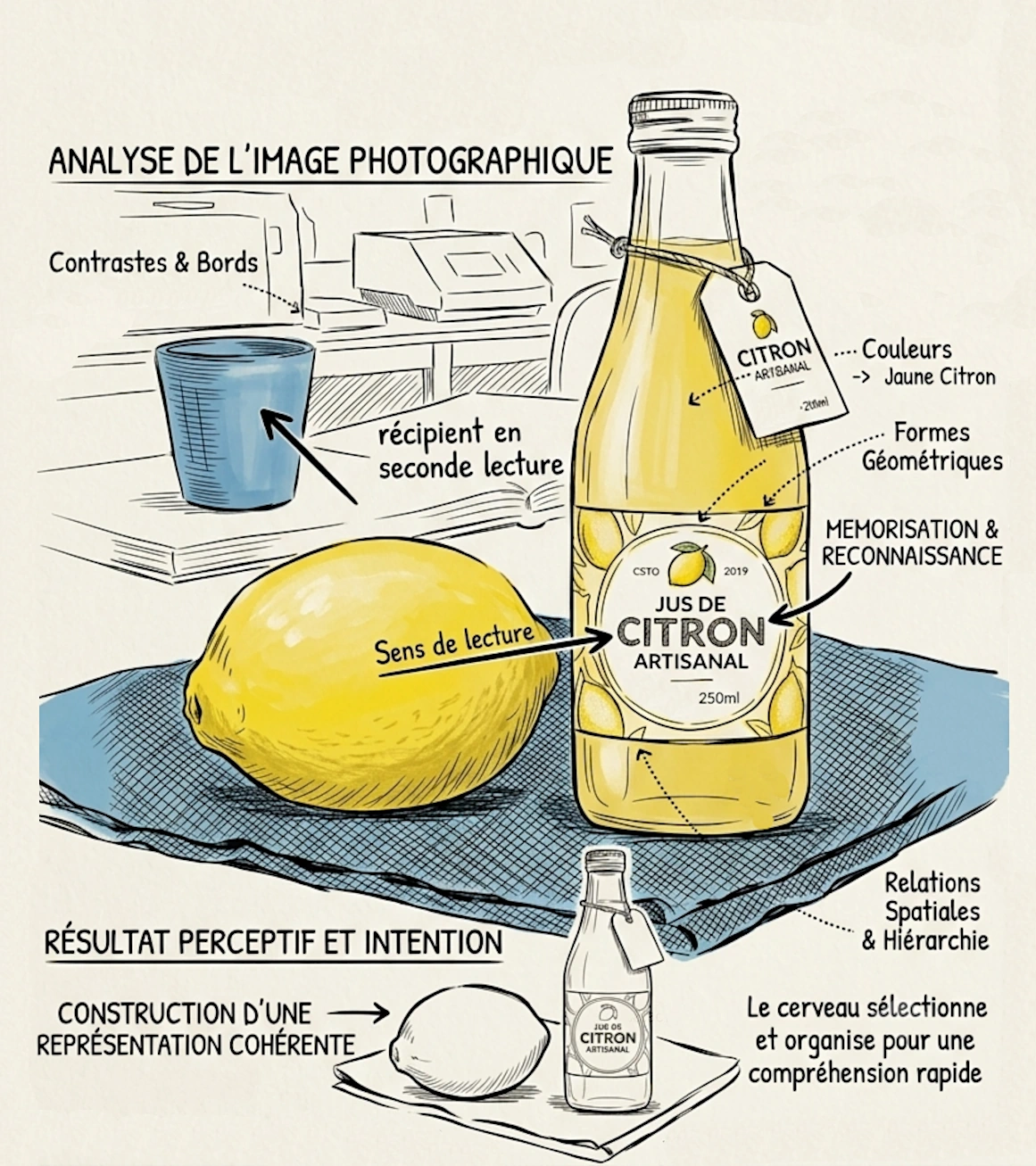

Photography applied to the mechanisms of visual perception
A photograph is more than just recording the light reflected by a subject. It is interpreted by the human visual system, which transforms light information into a coherent representation of the world.
When we look at an image, our brain analyzes many elements simultaneously: shapes, contrasts, colors, textures, depth, and relationships between the different objects in the scene. This analysis is not a simple reproduction of reality. The brain selects the most relevant information, organizes the visual elements, and builds a perception that allows for quick understanding of the image.
The sciences of vision and perception show that our gaze works according to complex mechanisms. Even before conscious analysis, our brain identifies important areas, detects contrasts and establishes a hierarchy between the different visual elements.
Understanding these mechanisms allows the photographer to go beyond simple representation. It becomes possible to design an image taking into account the way in which it will be observed, interpreted and memorized.

Interpreting an image
Colour is one of the fundamental elements of visual perception. It does not only represent aesthetic information: it actively participates in the way we organize space in an image.
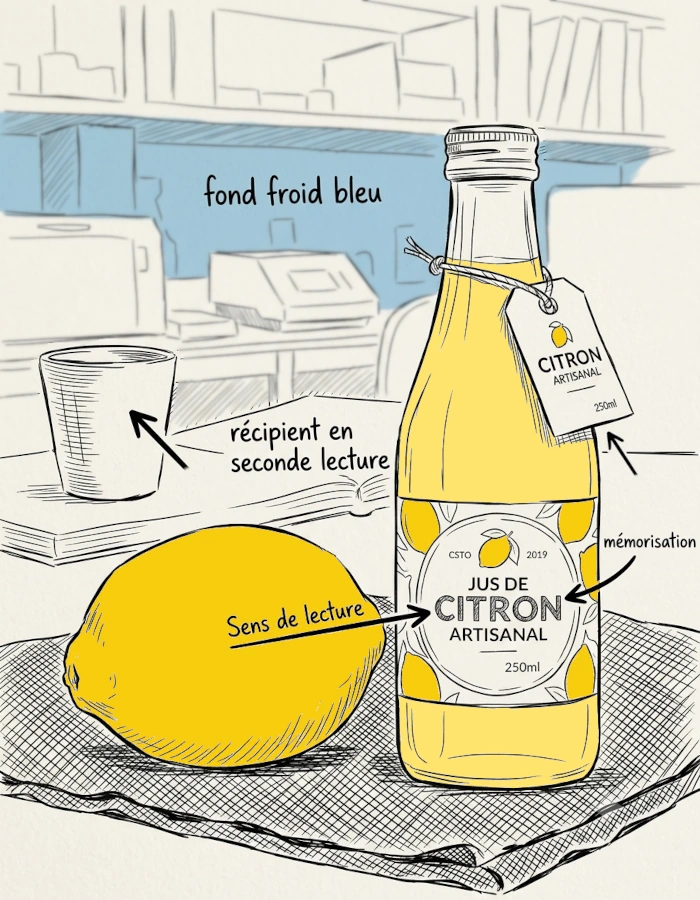
Research in the psychology of perception shows that warm colors, such as reds, oranges or some yellows, tend to be perceived as closer to the observer. Conversely, cool colors, such as blues or greens, usually give the impression of distance.
This phenomenon contributes to creating a sense of depth in a photograph that is nevertheless composed on a flat surface. The photographer can use this characteristic to structure an image, create a separation between different shots, and naturally draw attention to an essential element.
For example, a product photographed with warm tones in front of an environment with cooler shades may seem to stand out more from its context. The brain identifies the main subject more quickly, making it easier to read the image and enhancing its visual impact.
Create an image in accordance with the mechanisms of the gaze
However, visual perception does not depend solely on colour. Light, contrast, sharpness, composition, guidelines and weight distribution also influence the way the eye explores a photograph.
An effective image naturally guides the viewer’s eye. It creates a visual journey that allows you to gradually discover important information. This organization is not only a question of aesthetics: it corresponds to the biological and cognitive mechanisms used by our brain to understand our environment.
In professional photography, this approach makes it possible to strengthen the legibility of an image, to enhance a detail, to highlight a material or to convey an intention more precisely.
Understanding perception to create more effective photographs
At Audacieuse Galerie, we integrate knowledge from the sciences of visual perception into our photographic approach. This expertise complements the mastery of light, composition and shooting techniques to create images designed to be seen, understood and remembered.
For our customers, this represents a real added value. Professional photography doesn’t just have to look good. It must also convey an identity, reveal a know-how and create an immediate connection with the viewer.
In an environment where images are plentiful and attention becomes a valuable resource, a photograph must be able to stand out. It must attract the eye, convey a clear message and remain present in the memory.
Whether it’s product photography, advertising photography, corporate photography, the enhancement of a craft or the creation of a brand image, each project is designed to meet the specific objectives of the client.
Our approach thus combines artistic sensitivity, technical mastery and understanding of the mechanisms of human perception. Photography then becomes more than just a visual representation: it becomes a strategic tool capable of strengthening your communication, enhancing your universe and giving more impact to your image.